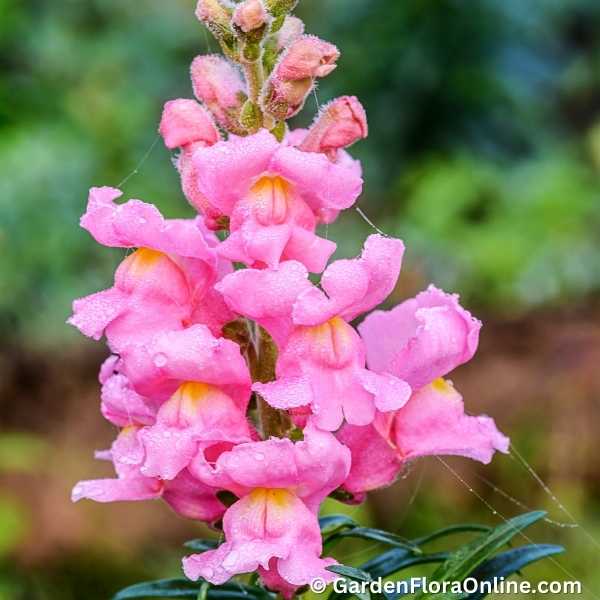
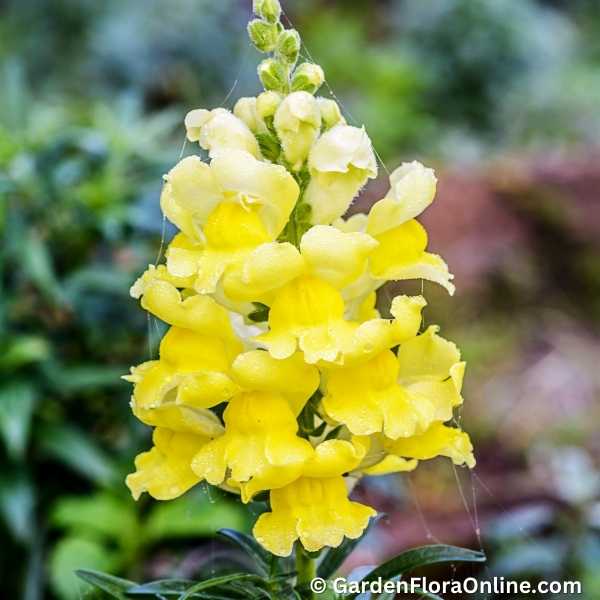
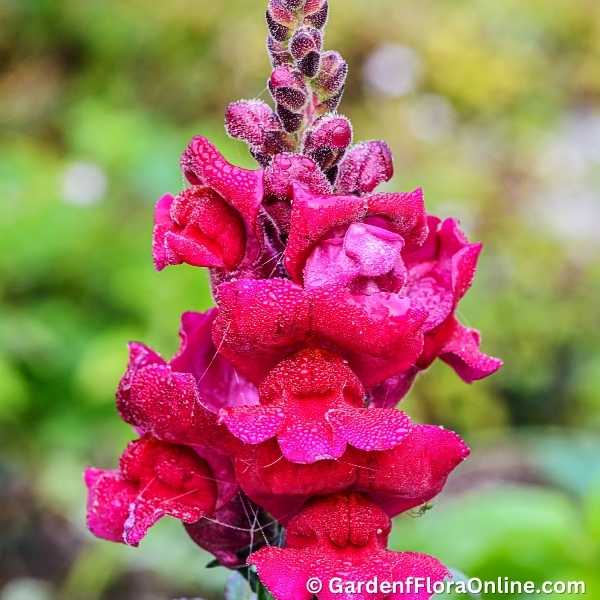
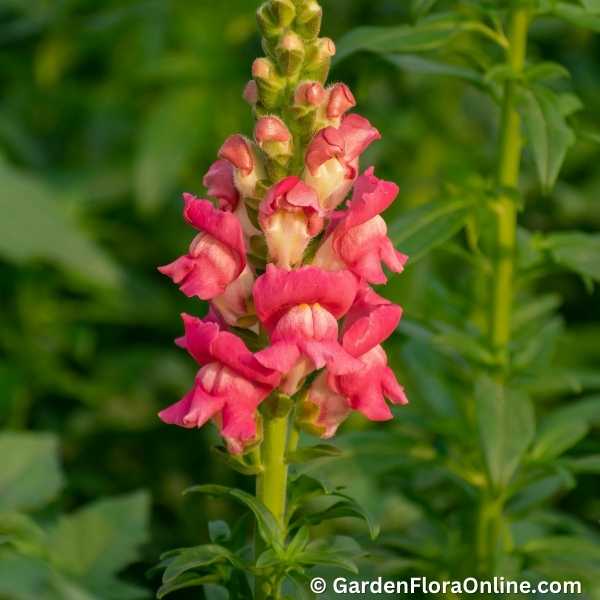
Antirrhinum majus (Snapdragon) is an erect, herbaceous annual or short-lived perennial with simple, lanceolate leaves arranged alternately on the upper stem and oppositely below. Stems are somewhat succulent and glabrous or sparsely hairy. It produces dense terminal spikes of distinctive bilabiate, “snap-like” flowers in a wide range of colours including white, yellow, pink, red, orange, and purple. Flowers are zygomorphic with a characteristic hinged corolla that opens when gently pressed. Fruits are small, ovoid capsules containing numerous tiny seeds.
Cultivation: Snapdragons grow best in cool climates and prefer well-drained, fertile soil enriched with organic matter. They require full sun for optimal flowering, along with regular but moderate watering. Seeds can be sown in nursery trays and transplanted once seedlings are established. Removing spent blooms encourages continuous flowering. Although typically grown as annuals, they may behave as short-lived perennials in mild climates. With proper care, Antirrhinum majus provides a striking display throughout the growing season.